Why Choose HemaGel®?
The exceptional medical device HemaGel® owes its unique structure and efficacy to the scientists from the Institute of Macromolecular Chemistry of the Academy of Sciences of the Czech Republic.
The exceptional medical device HemaGel® owes its unique structure and efficacy to the scientists from the Institute of Macromolecular Chemistry of the Academy of Sciences of the Czech Republic.
The uniqueness of this medical agent is given by the patented structure of the hydrophilic gel with its inbuilt scavenger of free radicals.
HemaGel® is completely safe for all patients, including mothers and children.
HemaGel® and the moist wound healing method lead to a completely new approach to the treatment of both chronic and acute wounds.
The moist wound treatment method currently represents the most preferred approach in the treatment wounds. The principle of this treatment lies in the maintenance of a moist environment within the wound. This promotes cell division and movement within the wound, maintains the correct pH at the affected site and fundamentally influences all phases of healing.
In the cleansing phase, it promotes the cleansing processes, facilitates surgical treatment with no damage to cells and prevents the inactivation of immune cells. In the granulation or proliferative phase, it promotes cell growth and division and the formation of granulation tissue. In the epithelisation phase, it promotes epithelial cell division and proliferation
The moist wound treatment method was already known to old Sumerians and Egyptians. Both the Greeks and Romans used honey as the principal component of their healing balms, which apart from other effects, maintained a moist environment within the wound. Many years later, this method was replaced by the use of dry, sterile mull that had excellent absorptive properties but led to the severe desiccation of wounds. In the 1960s, it was finally demonstrated that wounds treated in a moist environment have up to a 40% shorter period of healing compared to dry dressings. Nonetheless, it took another 30 years for the method of moist healing to be introduced into wider medical practice
The success of this treatment is thus directly dependent on the sufficient moistening of the wound. If the wound dries, cells die and new necrosis (dead tissue) forms, which may lead to a deepening of the wound. Therefore, modern materials used to treat wounds are adapted so that they duly maintain a moist environment. An example of such material is HemaGel – a patented hydrophilic gel that forms a stable environment over the wound, retains moistness, positively affects pH and protects the affected site from contamination.
Unique hydrophilic copolymer gel wound dressing and suppositories. Medical devices class IIa.
HemaGel® was primarily developed by the Institute of Macromolecular Chemistry of Academy of Sciences of Czech Republic.
Patented structure with integrated scavengers of free oxygen radicals. So only HemaGel® products can have this structure and mechanism of action.
It is a hydrophilic methacrylate substance based on the cross-linked copolymer 2-hydroxyehtylmethalcrylate containing polymer bound and sterically shielded amino groups.
This approved medical aid employs the modern and highly efficient principle of moist wound healing in combination with the original patented mechanism of scavenging of free oxygen radicals.
A chronic wound designates a secondarily healing wound that despite adequate therapy does not show a tendency to heal over a period of 6-9 months. Chronic wounds either transform from acute wounds as a consequence of associated diseases or infections or they develop due to micro-trauma to the skin, which itself is predisposed to difficult healing. The third possible cause of a chronic wound is the deepening of skin necrosis due to the underlying disease, for example lower limbs obliterating atherosclerosis.
A persistent open wound is an unpleasant manifestation of disrupted tissue healing. It is the possible entry site for microorganisms and may lead to the development of other infectious complications. Therefore, chronic wounds also represent a serious socioeconomic problem.
The term diabetic foot designates a complication of diabetes (diabetes mellitus), which involves the development of chronic, non-healing defects on the lower limbs. Two principal factors underlie this affliction – nerve damage and disorders of the blood supply, i.e. vascular attainment. According to its severity, this affliction may range from superficial ulcers to gangrene or necrosis of the whole foot. The diabetic foot syndrome requires complex treatment involving the treatment of infection, pain and even surgery or vascular interventions. Application of HemaGel to living tissue helps successful healing and alleviates pain.
I suffer from diabetic foot syndrome and I have developed scabs with pus underneath. How can I apply HemaGel?
HemaGel must be applied on living tissue. Removal of the scabs must be consulted with your attending physician.
Bedsores or decubiti are local ischemic affections of the skin that may even lead to skin, subcutaneous tissue and muscle necrosis (death). They form at sites of long-term contact between the patient´s skin and bed (e.g. bed ridden patients). At the sites of continuous contact and pressure, small vessels are compressed and tissues are thus poorly supplied with nutrients and oxygen,. This leads to their gradual death-the formation of decubiti. Decubiti appear relatively quickly, in some cases even after only a few hours. Up to 2/3 of decubiti develop within 14 days. HemaGel® significantly helps in their healing. Patients mainly appreciate the rapid relief and complete closure of the decubiti.
Bedsore classification
A varicose ulcer is a chronic wound caused by the loss of the epidermal and dermal cover (skin damage-tissue loss that may reach down to the subcutaneous layers). It usually develops in patients suffering for a long time from a disease of the lower limb vascular system. A frequent cause of varicose ulcers is chronic venous insufficiency. This is a state whereby changes in the vascular wall lead to the stagnation of venous blood in the lower limbs. This in turn leads to the development of excessive pressure in the venous circulation, the veins enlarge and varicose veins form. The varicose ulcer may then develop due to some trauma, for example involving chemicals, or to infections. Regular application of HemaGel on living tissue and removal of necrotic tissue leads to the very good healing of varicose ulcers. HemaGel may also be used in the initial stages of varicose ulcers, when the wound is not as yet completely open.
The development of varicose ulcers is usually preceded by the following manifestations:
Anal fissures are defects of the anal region at the site of transition between the mucosa and skin. They rank among the most unpleasant wounds, which thanks to the continuous irritation by stools heal for a long time and with complications. The anal region has an abundant vascular supply and thus these wounds bleed frequently. As demonstrated by the clinical study of Ervín Rusk MD conducted at the Outpatients Dept. of Surgery in Červená Voda, over three days of HemaGel application, 85% of patients with anal fissures confirmed pain alleviation and 75% confirmed that they had stopped bleeding. A total of 98% of patients cited a significant reduction of symptoms during just a few days of treatment with HemaGel.
A specialist examination is highly recommended before application- in order to exclude other causes of perianal symptoms. HemaGel has proved effective in the treatment of anal fissures associated with haemorrhoids, but it has no effect on the treatment of haemorrhoids and their causes per se
Is it possible to apply HemaGel even on open external haemorrhoids?
Yes, the gel is also suitable for this.
Is it possible to apply HemaGel to the mucosa of the external genitals?
HemaGel may be used for the healing of wounds on the external genitals with no problem.
Medical pedicure is the professional care for feet and nails that uses special high-frequency milling cutters. This method is very safe and especially suitable for diabetics. It resolves e.g. problems with sores, corns, heel fissures, thickened, deformed and ingrowing nails. We recommend the application of HemaGel following a medical pedicure, as thanks to its active substances it accelerates the treatment of minor wounds of the feet.
Surface skin injuries are those that heal primarily within 6 weeks; thus, in a relatively short period of time, with no significant complications. They include all wounds ranging from small abrasions to the destruction of parts of the body. They are most frequently caused by trauma, eventually surgical procedures.
The development of blisters is not an unusual occurrence- all you have to do is buy a new pair of shoes. The pressure exerted by unused shoes leads to swelling of the feet and then all it takes is a small movement during which the skin is torn from the dermis. At that moment, the space between the upper layer of the skin and dermis is filled by tissue fluid, whose function is to protect the tissue below it. Nonetheless, if the blister is damaged and the fluid seeps out, the wound is no longer protected and there is a risk of infection and damage to the new skin. At this moment, a number of people wrongly think that they can achieve better healing results if they expose the wound to fresh air and allow a scab to form. Clinical tests, though, have demonstrated that a much more effective treatment is so-called “moist” wound healing. With the help of HemaGel, which does not desiccate the wound, and thanks to the patented substance that decreases painfulness and accelerates healing, treatment of blisters is currently simpler and faster.
Various excoriations, abrasions, and cuts rank among the most frequent minor injuries. This group also includes blisters, cold sores, 1st degree burns, cracked mouth corners etc. These all involve the disruption of skin or mucosa continuity leading to a change of anatomical structure and function. As these injuries occur most frequently on the hands, feet and face, minimisation of scar development is also important.
HemaGel is just the ideal means for the treatment of such wounds, as it forms an elastic layer on their surface, separating the wound from the external environment. Thanks to its composition, HemaGel does not penetrate into the body but acts only on the surface of the wound. It may thus be used even by pregnant and breastfeeding women and children. HemaGel is favoured not only by children because compared to commonly used medical devices it does not adhere the dressing to the wound and thus changing the dressing is painless.
Cold sores are certainly not an agreeable thing. Moreover, at the time the blisters start bursting, there is a risk of virus transmission, which is why rapid treatment is the best solution. HemaGel represents a unique means of removing cold sores. Although it is not an anti-virotic and it cannot cure the cause of this infection, HemaGel significantly decreases pain, accelerates the treatment of these small wounds and prevents the formation of scabs and scars. Cold sores and all their associated disagreeable symptoms thus disappear within a very short time.
Is it possible to use HemaGel on a cold sore in pregnant women?
Yes, HemaGel may be applied to cold sores even in pregnancy with no problem, as it has positive effects, acts only on the surface of the wound, does not penetrate into the organism and thus has no side effects on the mother or foetus.
Can HemaGel be used on aphthae of the mouth?
Yes, it can also be used on aphthae of the mouth.
Does HemaGel help in the treatment of acne induced scars?
Older scars induced by acne cannot be healed with HemaGel, as this must be applied on fresh wounds.
Is it necessary to use a dressing when applying HemaGel on acne?
It is not necessary to apply a dressing on acne. Dressings are only used on those parts of the body where the gel could be inadvertently wiped off.
May I apply HemaGel over make-up when treating acne?
HemaGel heals only cleansed tissue and thus it is not appropriate to use it below make-up.
Is HemaGel also effective on milder forms of acne, e.g. small boils or scratched pimples?
Yes, HemaGel also helps in milder forms of acne.
Is it possible to apply HemaGel directly on the oral cavity mucosa?
Yes, HemaGel may be applied on the oral cavity mucosa.
Injuries are the unpleasant consequences of our sports, gardening or hobby activities, our carelessness and sometimes of simply bad luck. Whether the wound is treated at home or whether it requires surgery, follow-up care is very important. HemaGel is ideal for this purpose, helping in all types of wounds, accelerating the healing process and ameliorating the aesthetic consequences of the wound.
Surgical wounds and other surgical interventions on the organism are associated with inflammation that often manifests as oedema of the wound and pain. Post-surgical care is thus just as important as the operation itself. HemaGel successfully applies the so-called “moist” healing process in the treatment of various types of wounds or skin damage, including surgical wounds, and it thus accelerates overall post-surgical regeneration. Another positive aspect is the significant reduction in the size of scars or eventually their complete smoothing out.
I split my head, lip and chin during a fall. Can I use HemaGel even on sutured wounds with the sutures still in place?
Yes, you can use HemaGel even on such wounds. We recommend that you begin applying HemaGel immediately.
Does HemaGel have any effect on keloid scars?
Yes, HemaGel smoothes out these scars. We recommend that the product be used for at least 14 days.
Is it possible to use HemaGel on closed scars, older than 15 days?
We recommend that you try this option. HemaGel acts best on fresh scars and the effect on healed scars need not be as successful. Nonetheless, we recommend that you try HemaGel, as even in such cases the scar could be partially smoothed out and the skin could return to its natural pigmentation ...
Can HemaGel be used on a fresh surgical wound on which a scab has formed? Is it necessary to eventually remove this scab?
You may apply HemaGel on fresh surgical wounds with no worry. Nonetheless, we do not recommend the removal of scabs. In such cases, do not be sparing in your application of HemaGel on the wound. Seeing that moist healing is involved, the scabs should partially peel off after twelve hours.
Can I use HemaGel on a fresh surgical wound?
HemaGel may be used on any type of surgical wound/scar.
My surgical wound is healing very poorly after the operation. Pus has been forming around the wound for three days and this has to be cleansed with hydrogen peroxide, Could HemaGel help?
Yes, HemaGel should help if you apply it three times a day to the wound.
Can HemaGel also be used to heal the hole left by a tracheostomy?
Yes, HemaGel should be effective even in such cases.
Can HemaGel be used on an infected wound, which is at the same time being treated with antibiotics?
It is certainly possible to use HemaGel in such cases. It is nonetheless necessary to continue with the antibiotic treatment as HemaGel accelerates healing and cicatrisation, but it does not have antibacterial effects.
My perineum and a perianal fissure were stitched after delivery. I have another scar between the anus and vagina. Can I use HemaGel for wound healing even in this area?
You can start treatment immediately. HemaGel is also suitable for the treatment of the injuries that you have described. There is no problem with using the gel on the genitals.
Is it possible to apply HemaGel on scars in the area of the eyelid and to thus decrease their conspicuousness?
There should be no problem with its application on the eyelid. It is sufficient to apply a thin layer of the gel.
Can I apply HemaGel on a surgical scar in a small child?
Yes, naturally. HemaGel has a positive healing effect, it does not penetrate into the organism and acts only on the surface of the wound. Therefore, it has no side effects.
Is it necessary to wipe off the old layer of the gel before every new application of HemaGel?
We recommend that this layer be washed off if HemaGel has been in place for more than ten hours and then to apply a new layer of HemaGel.
Is it possible to remove scars completely with the aid of HemaGel?
In such cases, the effect of HemaGel should not be overestimated. The scar will certainly be less conspicuous but we cannot promise you any miracles unfortunately.
Burns are very serious injuries. Especially extensive burns are characterised by very painful, long-term and demanding treatment; a very high mortality and frequent permanent consequences. Burns may be caused by fire, electricity, chemicals, boiling liquids or UV radiation.
Hemagel is a suitable medical device for the rapid treatment of wounds induced by burns – 1st degree burns. It accelerates the healing process, prevents wound desiccation and precludes the formation of scars. In lower degree burns, its application may lead to the complete smoothing out of the scar.
Can HemaGel help even in the treatment of older minor scars following burns?
HemaGel heals best fresh and old wounds. Unfortunately, it does not help in the case of old and healed scars.
HemaGel may be used for the treatment of superficial skin injuries such as abrasions, burns, cuts and minor injuries. The correct application of HemaGel or frequency of dressing changes may differ. For detailed information divided according to the type of wound see below:
Every type of wound demands a specific approach-for details refer to the HEMAGEL APPLICATION section. The standard approach may be summarised in several basic steps. First, the wound must be cleansed and slightly dried using sterile gauze. Next, apply an appropriate layer of HemaGel to the wound and cover it by a non-absorptive dressing. It is then sufficient to lightly wash the wound once a day, ridding it thus of the layer of old gel and then to apply a new layer, again protecting it with a non-absorptive dressing.
Further applications as needed, every 24-48 hours.
You may use, for example, the non-absorptive dressing retention tape Hypafix® from Laboratories FISCH or Omnipor, Omniflex, Omnimed from Hartmann or dressing material from Braun or Johnson&Johnson.
HemaGel can be easily removed by washing the wound with warm water.
If there is a risk of the gel being wiped off (e.g. by clothing), you must cover the wound with a non-absorptive dressing and then tape or wrap it.
Like every medical device, HemaGel must be kept out of the reach of children. In view of its high water content, HemaGel must not be exposed to temperatures below freezing point. The ice crystals could damage its macromolecular structure, which would eliminate its efficacy.
HemaGel was originally developed specifically for burns and experience with it in this indication has been good. Patient age is not important. You may start applying the gel on the affected site immediately. You must ensure that the gel is not wiped off and eventually cover the site with non-absorptive tape or dressing. If an absorptive material was to be placed on the wound, most of the gel would be absorbed and the expected effect would not materialise.
No, HemaGel is available over the counter in pharmacies.
Yes, HemaGel may be used by pregnant women or breastfeeding mothers as the active substances act only within the wound and do not penetrate into the circulation.
This hydrophilic gel for wound treatment may be used for all age categories.
No side effects were found during clinical testing. No allergic reactions, increased pain or any other contraindications have been documented.
Although cold sores are a viral disease, they manifest as a wound. HemaGel thus does not treat the cause of the cold sore but helps during the healing of its manifestations.
HemaGel is sold in packages of 5 g and 30 g.
HemaGel is generally available in all pharmacies. If a concrete pharmacy does not have it on offer, it may order it via the pharmacy distributor within 24 hours.
This is the bottom layer of tissue in the wound. HemaGel heals only living tissue and is not effective if remnants of necrotic tissue, e.g. scabs, are present.
The wound must first be washed with warm water. This will rid it of mechanical impurities. Next, a layer of HemaGel is applied and covered by non-absorptive dressing. Before every subsequent application, the wound must again be washed with warm water in order to rid it of the old layer of HemaGel. A new layer of the gel is then applied.
A plastic bag is definitely unsuitable. Apply a layer of gel to the attained area and cover with sterile gauze.
After how long does HemaGel begin to act and after how long is the abrasion healed.
HemaGel acts immediately, calming the wound and cooling it. Treatment is individual and depends on the size of the wound. In general, though, it is shorter by 40-60% compared to classical treatment.
If you leave the gel on the skin until completely dry, nothing will happen. You can naturally wash the skin, but we recommend that you do so very gently.
Yes, this soft new skin should also be treated with HemaGel until the wound has healed completely.
HemaGel® is a tried and tested assistant in the treatment of surface skin injuries, radically accelerating their healing.
HemaGel® PROCTO suppositories support the healing of acute and chronic wounds of the rectal mucosa in patients with fissures and hemorrhoids, including patients after the Barron Ligature. Furthermore, to reduce bleeding in patients with bleeding hemorrhoids and to remove discomfort, especially burning and itching in the rectum.
HemaGel® PROCTO is a Medical Device class IIa. HemaGel® PROCTO offers a unique solution to accelerate the healing of acute and chronic wounds and anal skin lesions.
HemaGel® PROCTO suppositories are used as a supportive treatment of haemorrhoids and other rectal diseases such as painful skin cracks (anal fissures) and tears in the anal skin and mucosa (anal rhagades). HemaGel® PROCTO reduces pain caused by anal fissures, reduces bleeding during defecation and accelerates healing.
Due to its macromolecular structure, HemaGel® PROCTO does not penetrate into the organism. Consult your doctor before using it for children, pregnant and breastfeeding women.
Rectal diseases require special hygiene and regular bowel movement. Therefore drink appropriate amounts of liquids, eat a low-spice diet and increase the fibre intake.
The results of clinical tests and studies have confirmed that HemaGel® is a highly effective hydrophilic gel suitable for a wide range of skin wounds – from grazes, slicing injuries and surgical wounds to burns.
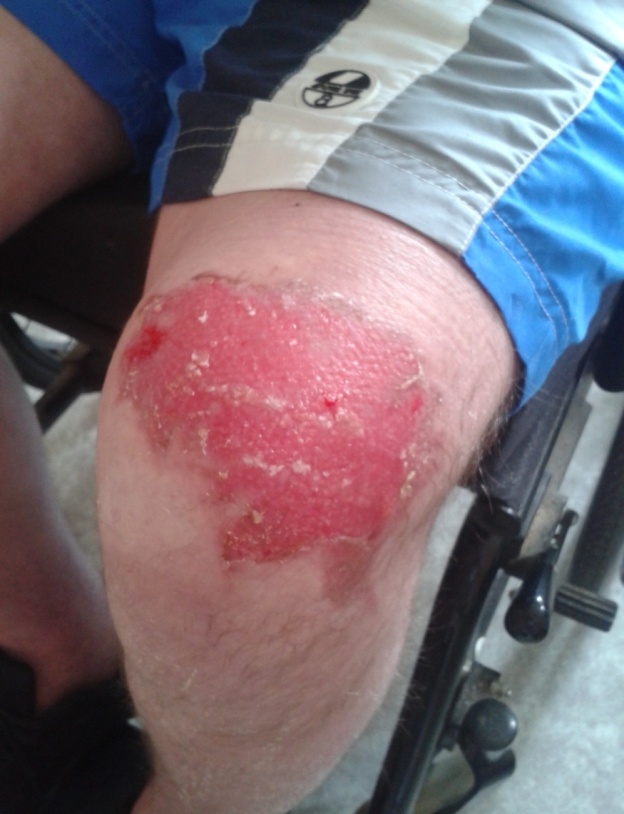
Coffee burn: 1. day
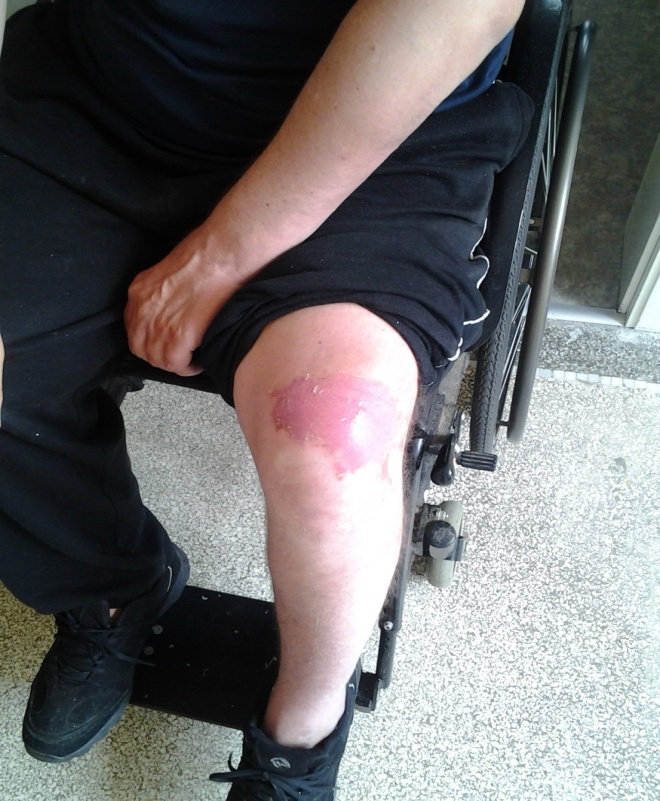
Coffee burn: 4. day
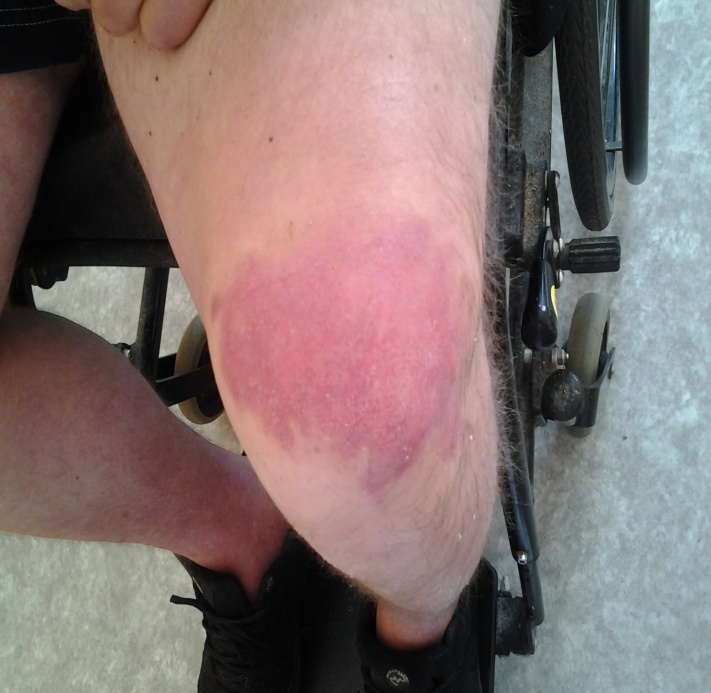
Coffee burn: 8. day
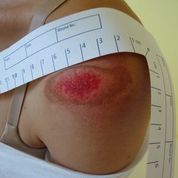
Abrasion of the shoulder (fall on roller skates): 1. day
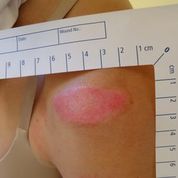
Abrasion of the shoulder (fall on roller skates): 7. day
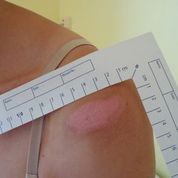
Abrasion of the shoulder (fall on roller skates): 11. day
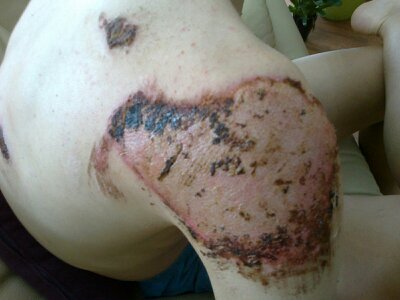
Abrasion of the shoulder (fall from a bicycle): 1.
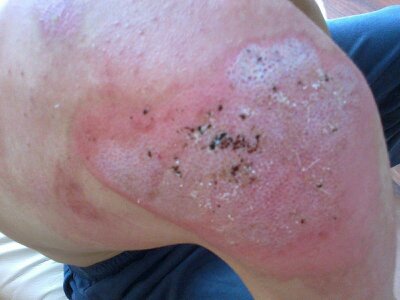
Abrasion of the shoulder (fall from a bicycle): 4. day
HemaGel® PROCTO suppositories support the healing of acute and chronic wounds of the rectal mucosa in patients with fissures and hemorrhoids, including patients after the Barron Ligature. Furthermore, to reduce bleeding in patients with bleeding hemorrhoids and to remove discomfort, especially burning and itching in the rectum.
HemaGel® PROCTO is a Medical Device class IIa. HemaGel® PROCTO offers a unique solution to accelerate the healing of acute and chronic wounds and anal skin lesions.
HemaGel® PROCTO suppositories are used as a supportive treatment of haemorrhoids and other rectal diseases such as painful skin cracks (anal fissures) and tears in the anal skin and mucosa (anal rhagades). HemaGel® PROCTO reduces pain caused by anal fissures, reduces bleeding during defecation and accelerates healing.
Due to its macromolecular structure, HemaGel® PROCTO does not penetrate into the organism. Consult your doctor before using it for children, pregnant and breastfeeding women.
Rectal diseases require special hygiene and regular bowel movement. Therefore drink appropriate amounts of liquids, eat a low-spice diet and increase the fibre intake.